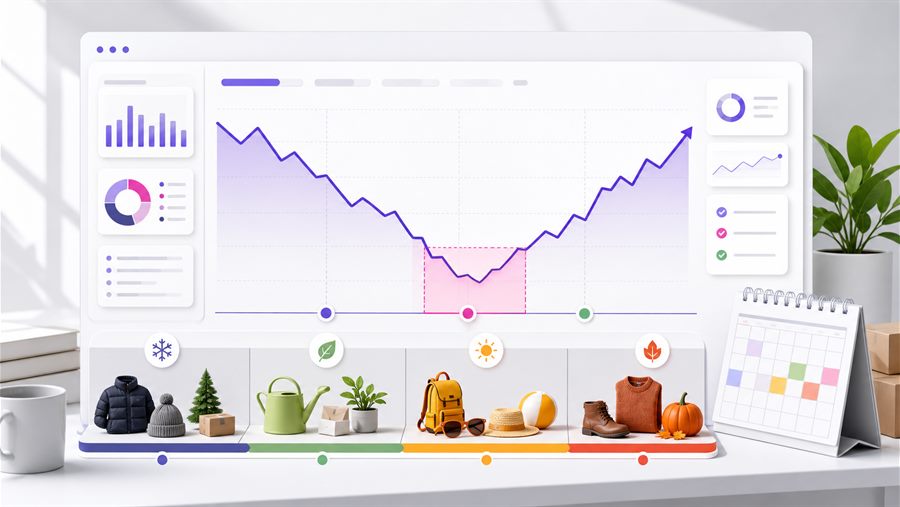
Amazon sales can feel like a roller coaster if your inventory plan begins and ends with Q4.
November looks amazing. December keeps moving. Then February arrives, summer vacations begin, and sales start looking like they also took some time off.
Slow months are not always avoidable. Customer demand changes, competitors arrive, suppliers run out of stock, and products lose momentum. But the size of the slowdown is often a planning problem.
The solution is to stop reacting to the current month and start sourcing for the months ahead.
Build a Stable Base Before Chasing Seasonal Spikes
Seasonal products should strengthen your business, not become the entire business.
Begin with a base of replenishable products you can buy throughout the year. These products may not produce spectacular margins, but they create steady sales while seasonal and sale-only inventory adds growth.
A balanced inventory mix can include:
- Full-retail replenishments: Products you can reorder regularly at an acceptable margin.
- Sale-only leads: Products that become attractive during supplier promotions.
- Opportunity leads: Listings where competition drops and selling prices may rise.
- Seasonal products: Inventory tied to a holiday, weather pattern, school calendar, hobby, or yearly buying behavior.
Prioritize proven replenishments when allocating inventory dollars. You already have sales history, actual fee data, return experience, and a better understanding of how quickly those products move.
At the same time, keep filling the lead funnel. Products disappear, brands become restricted, competition grows, and suppliers run out of stock. Depending on a small group of ASINs is how one change turns into an entire slow month.
Source Seasonal Products Months Before Customers Need Them
Customers buy seasonal products before the event. Sellers must buy even earlier.
If you wait until Valentine's Day to source Valentine's products, your shipment may arrive at Amazon in March. That is excellent timing if your goal is to store heart-shaped inventory for eleven months.
The training recommends beginning at least two months in advance. For larger buying plans, products with longer supplier lead times, or major Q4 inventory, start even earlier.
Work backward from the expected demand window:
- When will customers begin buying?
- When must the inventory be available for sale?
- How long will Amazon receiving and placement take?
- How long will prep and shipping take?
- How long will the supplier take to deliver?
- When must you place the order?
- When must the product already be researched and saved?
For example, if demand begins in June, April may be the buying month. The sourcing and validation work may need to happen in February or March.
This is why seasonal planning is more than choosing products. It is shipment planning with a calendar attached.
Validate the Real Demand Window With Keepa
A product that looks seasonal may not peak when you expect.
Review several years of Keepa history when available. Look for repeating periods where sales rank improves, monthly sales rise, prices strengthen, or sellers run out of stock.
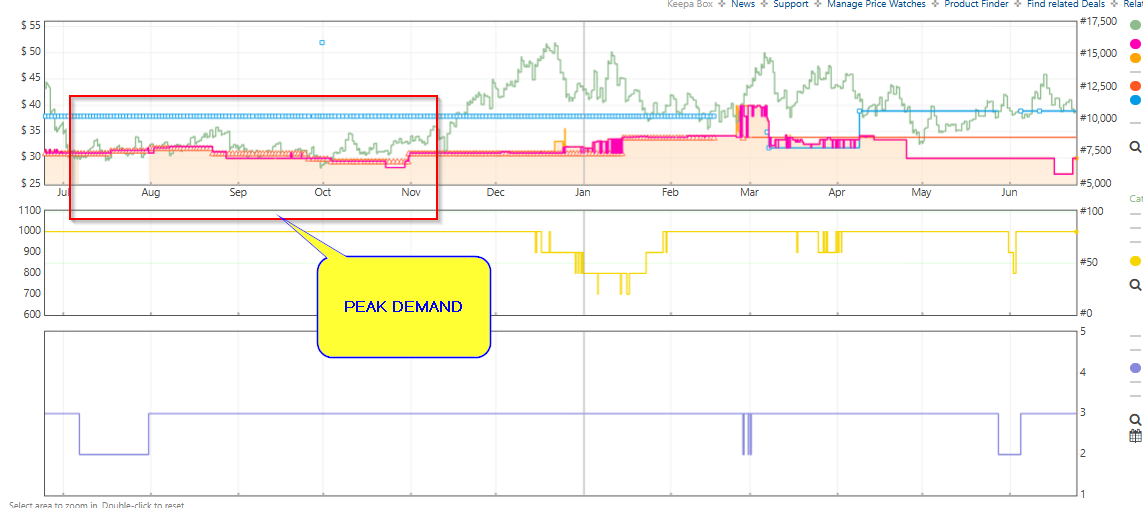
Pay attention to:
- When demand begins rising
- The strongest selling weeks
- When demand falls
- Amazon's historical stock pattern
- Seller and offer counts during the peak
- Whether prices rise or collapse
- Whether the pattern repeats each year
Do not assume a Christmas-looking product sells best in December. The chart may show its strongest period in October and November. Your buying plan should follow the evidence, not the snowflake printed on the box.
Historical demand does not guarantee future sales. Use it to choose timing and test quantities, then adjust based on current competition and price.
Use a Seasonal Buying Calendar
A seasonal calendar gives your sourcing team a place to begin. It should suggest categories to research, not replace product-level validation.
Examples include:
| Customer Demand Period | Product Ideas | Begin Researching or Buying |
|---|---|---|
| January | Fitness gear, resistance bands, meal-prep products, organization supplies | October to November |
| February | Valentine's gifts, fragrance, skincare, beauty products, cards | November to December |
| March and April | Gardening tools, lawn products, Easter supplies, spring cleaning | January to February |
| May and June | Graduation, outdoor recreation, travel, Father's Day, summer supplies | March to April |
| July and August | Pool products, outdoor games, travel accessories, back-to-school | May to June |
| September and October | School supplies, fall decor, Halloween, cold-weather preparation | July to August |
| November and December | Toys, gifts, holiday decor, winter products, entertaining supplies | August to October |
Use the complete Amazon Seasonal Buying Guide for more category ideas throughout the year.
Regional weather, school schedules, and local events can shift demand. A pool product may peak earlier in Florida than in Minnesota. Validate each product's history instead of treating the calendar like a permission slip to buy 400 units.
Tag Seasonal Leads in 3P Mercury
Seasonal research is wasted if you cannot find the products when it is time to buy.
Create tags around the buying or selling window, such as:
sell-jan-febsell-mar-aprsell-jun-augbuy-in-aprilback-to-schoolhalloweenq4-gifts
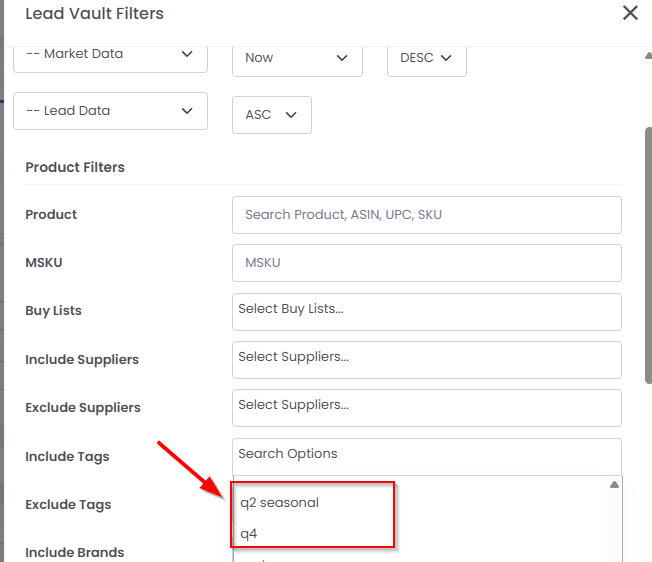
The most useful tag is the one that tells you what action to take. A summer tag is helpful. A buy-in-april tag is harder to misunderstand.
When April begins, filter for products tagged for a June-to-August selling window. Review current supplier price, stock, Amazon competition, fees, and recent demand before placing the order.
You can also combine seasonal tags with lead types:
- Seasonal full-retail replenishment
- Seasonal sale-only
- Seasonal opportunity
- Seasonal test
- Seasonal proven winner
This helps separate reliable repeat products from inventory that only works during one promotion.
Presource Supplier Catalogs Before the Sale
One of the strongest ideas from the training is simple: do the sourcing before the supplier promotion begins.
Imagine a retailer announces a major beauty sale. If you begin researching after the discount goes live, you must identify products, match listings, validate suppliers, calculate costs, and evaluate demand while competitors are already adding inventory to their carts.
Instead, source the retailer's catalog in advance. Save the exact products and supplier links in 3P Mercury even when they are not currently profitable.
When the promotion begins:
- Filter by supplier.
- Refresh costs and stock.
- Apply the sale discount.
- Add cashback, discounted gift cards, and card rewards when appropriate.
- Review which products now meet your requirements.
- Build the buy list.
The difference is speed. You are evaluating purchase-ready research instead of starting from a blank screen.
Sign up for supplier newsletters and monitor promotions regularly. Check cashback and discounted gift-card opportunities, but confirm all terms, exclusions, and availability before including them in your cost.
Keep Replenishments in Stock
Seasonal planning does not replace ordinary restocking.
Use 3P Mercury and Merc to review products that need replenishment, confirm they remain profitable, and reorder before they stock out. Stable replenishments can protect the sales floor while you wait for the next seasonal demand window.
The training also notes that consistent stock availability may help Amazon place inventory closer to recurring demand and can support Buy Box performance. Exact Buy Box behavior is not guaranteed, but running out of proven products still creates an avoidable sales gap.
Review reports to identify:
- Products selling faster than expected
- Categories with strong or weak net margins
- High-return products
- Products that repeatedly stock out
- Seasonal products that deserve a larger test next year
Use actual results to improve the next cycle. If a gardening product sold out in early March, begin earlier next year. If Halloween inventory was still sitting in January, reduce the quantity or tighten the buying window.
Follow a Monthly Anti-Slowdown Routine
A simple monthly process keeps the strategy moving:
Three months before demand
- Review the seasonal calendar.
- Research categories and suppliers.
- Validate historical demand in Keepa.
- Save and tag qualified leads.
Two months before demand
- Refresh supplier costs and availability.
- Order products with longer lead times.
- Plan prep, shipping, and Amazon receiving.
- Test uncertain listings conservatively.
One month before demand
- Confirm inventory is available or inbound.
- Replenish early sellers.
- Monitor competition and prices.
- Avoid buying deeply when the demand window is closing.
During and after the season
- Track sales and stock.
- Reorder only when enough demand remains.
- Record winners, misses, and final margins.
- Update tags and notes for next year.
The purpose is not to eliminate every soft week. It is to prevent an entire month from becoming a surprise.
Final Takeaway
Steadier Amazon sales come from preparing inventory before customers begin searching for it.
Maintain a base of proven replenishments. Keep adding qualified leads. Research seasonal categories months ahead. Validate their true selling window in Keepa. Tag them in 3P Mercury. Presource supplier catalogs before promotions. Then work backward from the demand date so inventory arrives while customers still care.
Do that throughout the year and slow months become planning periods with targeted demand, not empty stretches where you wait for Q4 to rescue the business.
Frequently Asked Questions
How far in advance should Amazon sellers buy seasonal inventory?
Start planning at least two months before demand. Products with long supplier, prep, shipping, or Amazon receiving times may require an earlier start.
How do I identify a seasonal Amazon product?
Review multiple years of Keepa history for repeating changes in sales rank, price, offer count, and Amazon stock during the same part of each year.
How should I tag seasonal products in 3P Mercury?
Use tags tied to an action or selling window, such as buy-in-april, sell-jun-aug, back-to-school, or q4-gifts.
Why should I source products before a supplier sale?
Presourcing lets you filter and recalculate validated leads as soon as the promotion begins. Competitors who start researching during the sale may miss inventory or run out of time.
Plan Inventory Before Demand Arrives
Sign up for 3P Mercury to simplify your business. The one software that takes you from sourcing to shipping, automated with the power of AI.
Sign up for 3P Mercury