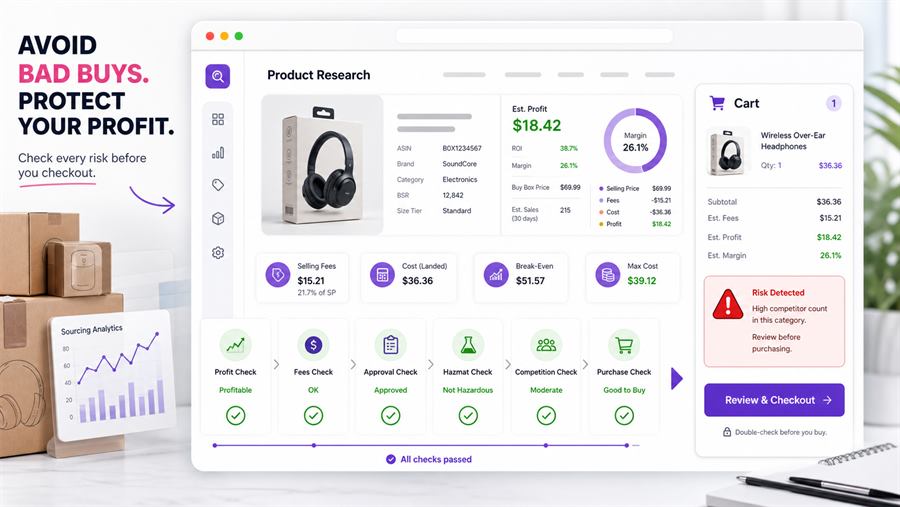
Bad Amazon buys usually do not look bad at first.
They look profitable. They look fast-moving. They look like the kind of ASIN you should grab before another seller finds it. Then the boring details show up later: fees, restrictions, hazmat status, competition, prep costs, slow sales, missing receipts, or inventory you forgot you already bought.
That is the expensive part of sourcing. The product does not announce, "Hello, I am about to become dead inventory." It just smiles politely and waits for your credit card.
The fix is not to stop buying. The fix is to make every product earn its way into your cart.
3P Mercury helps sellers do that by checking profit, custom costs, approval status, hazmat risk, seller competition, Buy Rules, purchase history, Buy Lists, purchase orders, receipts, and inventory workflow before money leaves the business.
Quick Answer: What Should You Check Before Buying an Amazon Product?
Before you add an Amazon product to your cart, check net profit, ROI, margin, Amazon fees, custom costs, approval status, hazmat risk, seller competition, price-drop risk, purchase history, inventory on hand, Buy List budget, and purchase documentation.
If a product fails one of those checks, it may still be worth watching. But it should not hit your cart until you understand the risk.
Start With the Free Profit Calculator
Grab 3P Mercury's profit calculator absolutely free. Register for a free account and you immediately get access to use the free calculator before you buy inventory.
Get the Free Profit CalculatorStart With Real Profit, Not Sale Price
The fastest way to make a bad buy is to compare the Amazon sale price to your supplier cost and call the difference profit.
That is not profit. That is optimism wearing a calculator costume.
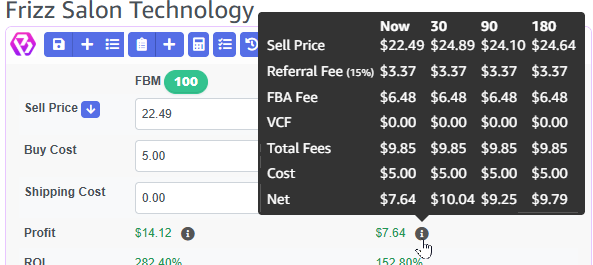
A real product review should include Amazon referral fees, FBA fulfillment fees, product cost, supplier shipping, prep, labels, inbound shipping, storage risk, other custom costs, net profit, ROI, margin, and break-even sale price.
3P Mercury's free profit calculator helps sellers check those numbers on the product page before buying inventory.
The goal is simple: if the product only works when you ignore real costs, it does not work.
Stress test the price before you buy
Do not calculate profit only at the current Buy Box price. Run the numbers at the current selling price, 5% below, 10% below, and your break-even price.
If a tiny price drop wipes out the deal, you are not looking at a confident buy. You are looking at a very fragile wish.
Add the Costs Most Sellers Forget
Some bad buys are not bad because of Amazon's fees. They are bad because the seller forgot their own fees.
A product may look good until you add prep center fees, poly bags, bubble wrap, labels, inbound shipping, supplier shipping, payment costs, repackaging costs, and bundle labor.
3P Mercury lets sellers add custom fees so the profit calculation matches the way their business actually operates.
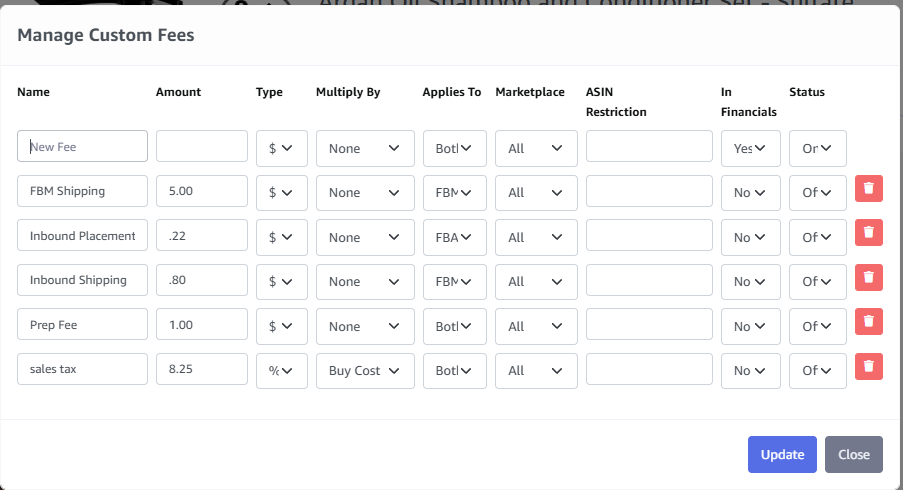
Small costs matter. A $0.60 prep fee and $0.35 inbound shipping estimate may not sound dramatic, but on a thin-margin product, that can be the difference between a smart test and a donation to the spreadsheet gods.
Check Approval, Hazmat, and Listing Restrictions
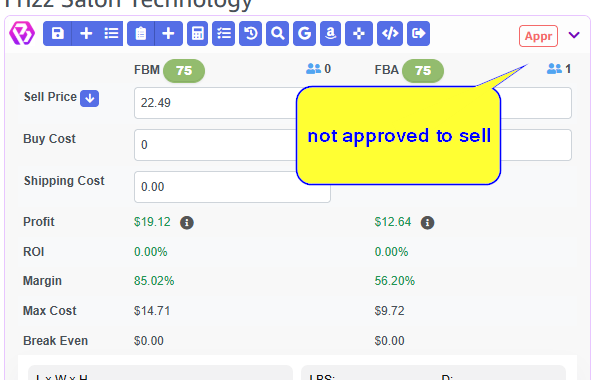
A profitable ASIN is useless if you cannot sell it. Before a product reaches your cart, check whether your seller account is eligible to list it in the correct condition.
Common restriction issues include brand restrictions, category restrictions, ASIN-level restrictions, condition restrictions, product type restrictions, approval-required listings, and hazmat or dangerous goods concerns.
3P Mercury can surface approval issues during product analysis so sellers do not buy inventory first and discover the problem later.
Hazmat checks matter too. Some products may have dangerous goods concerns, FBA limitations, extra handling rules, or review delays.
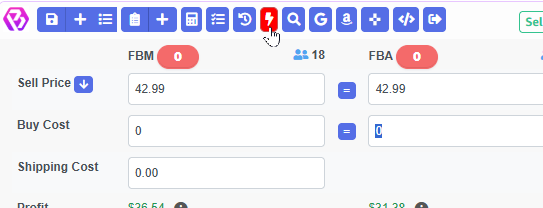
The key question is not only, "Is this product profitable?" The better question is: Is this product profitable, sellable, and clean enough for my workflow?
Review Seller Competition Before You Test the ASIN
A product can pass the profit check and still be a bad buy. Why? Competition.
If the listing has too many sellers, sellers with deep inventory, Amazon on the listing, or a history of price drops, your estimated profit may not survive long enough for your units to sell.
Before buying, check the number of FBA and FBM sellers, estimated stock levels, whether sellers are heavily stocked, whether Amazon is selling the product, whether the Buy Box rotates, whether offer count is increasing, and whether price has been dropping.
3P Mercury's seller analysis helps show competing sellers and estimated stock levels, giving you a better idea of whether your test buy can realistically move.
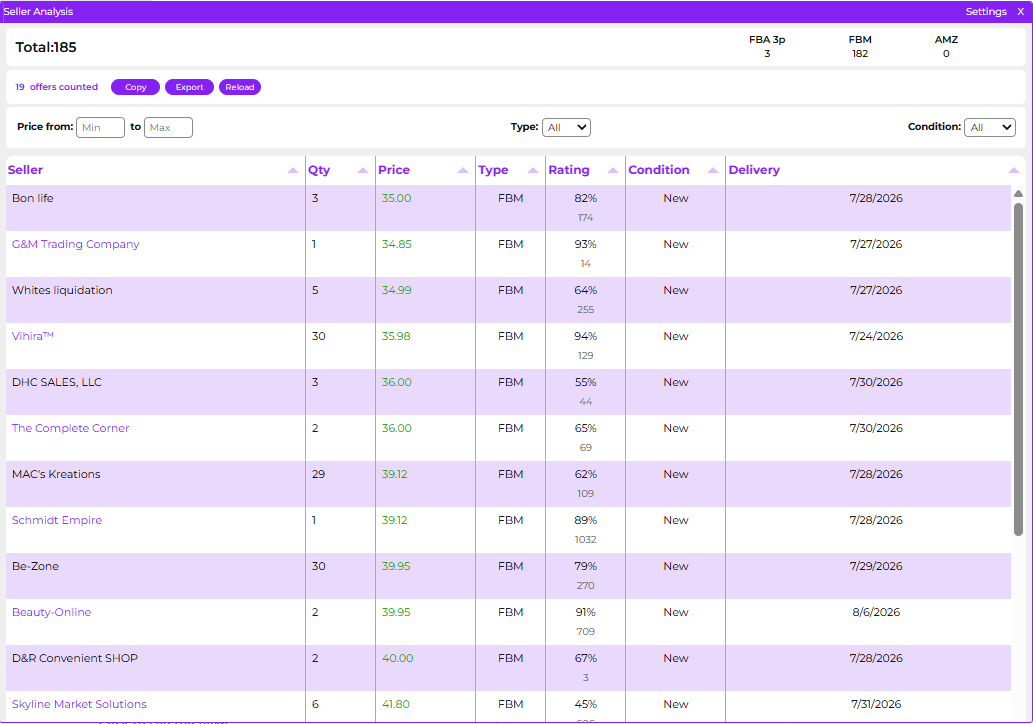
If a listing has ten sellers and most have low stock, a small test may make sense if the rest of the numbers work. If a listing has twenty sellers and several are holding deep inventory, you may be buying a ticket to a price war.
Use Buy Rules Instead of Gut Feeling
Gut feeling is useful after you have experience. It is not a substitute for rules.
Before reviewing products, set buying standards. You might require 30% ROI, $3 minimum net profit, 12% margin, approval to sell, a clean hazmat check, custom fee accuracy, competition limits, and a fit with your current cash-flow plan.
3P Mercury Buy Rules help sellers apply those standards consistently.
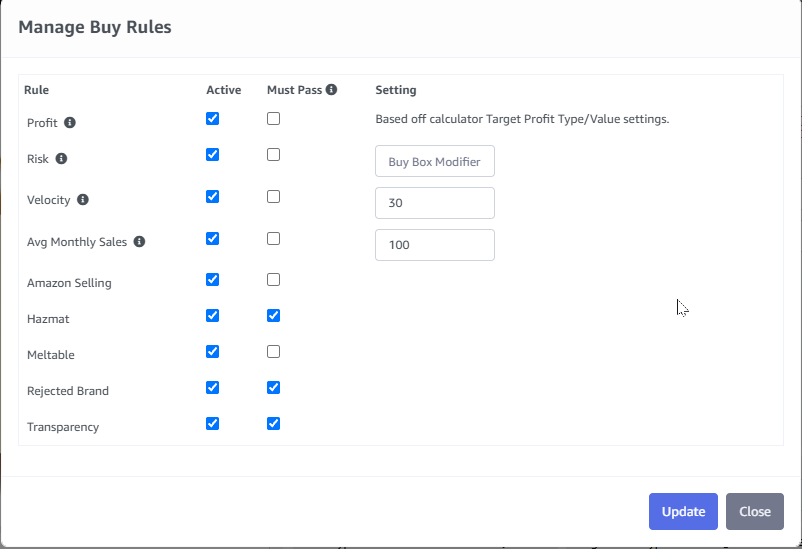
When you only check one product, you can hold the whole decision in your head. When you check fifty products, your head becomes a junk drawer. Buy Rules keep the review process consistent even when you are tired, rushed, or working through a long lead list.
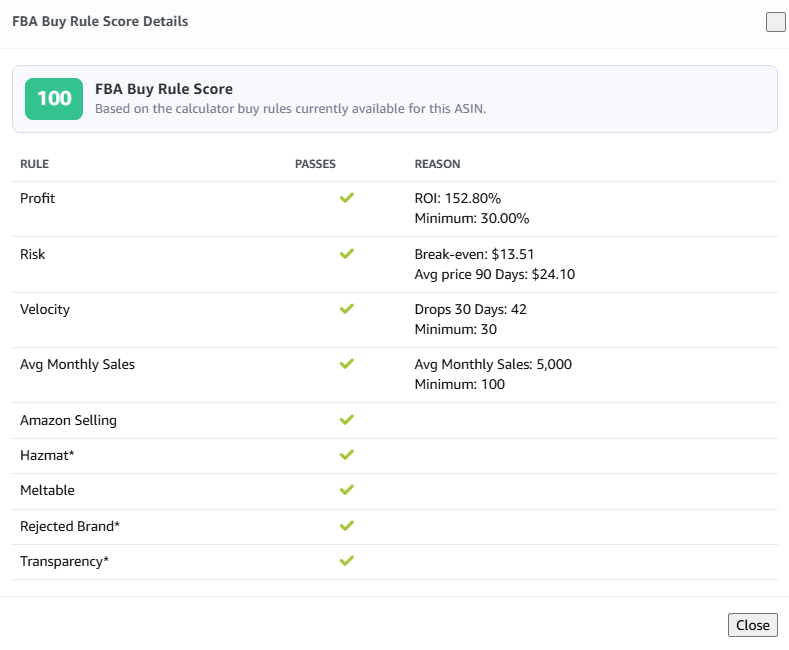
The goal is not to remove judgment. The goal is to keep judgment from getting bullied by excitement.
Check Purchase History Before You Rebuy
One of the easiest bad buys is accidentally re-buying something you already learned from.
Before ordering, check previous supplier cost, previous order quantity, current on-hand inventory, inbound inventory, prior sales results, whether the last batch sold quickly, and whether actual profit matched the estimate.
3P Mercury can show inventory and purchase history alongside the product analysis, so sellers can compare today's opportunity against what actually happened last time.
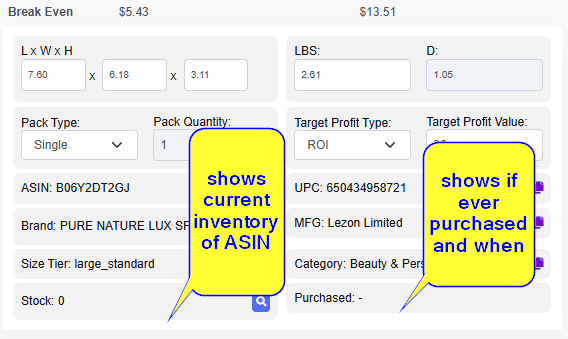
If the ASIN sold quickly before and still meets your rules today, that is useful evidence. If it looked great before but sat for 90 days, that is also useful evidence.
Build a Buy List Before Checkout
Once a product passes the checks, do not rush straight to checkout. Add approved items to a Buy List first.
A Buy List gives you one more review step before cash leaves the business. Instead of buying product-by-product, you can review total spend, total expected profit, expected ROI, supplier split, units per ASIN, products that need review, assigned buying windows, and current cash-flow fit.
3P Mercury Buy Lists help sellers organize approved products into a cleaner purchasing workflow.
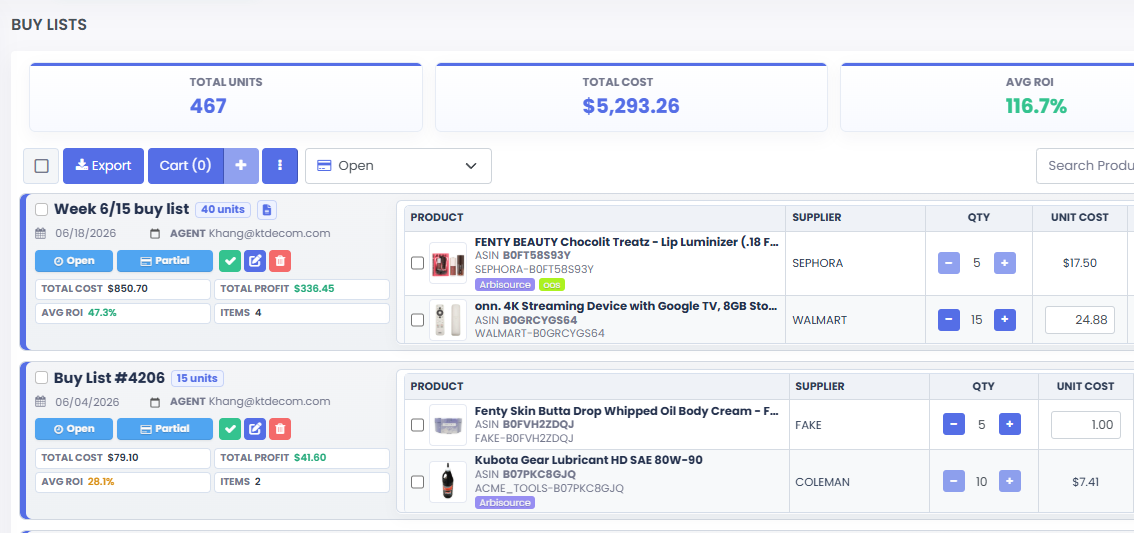
This is where you catch mistakes like buying too many units of one ASIN, overspending at one supplier, missing a better product in the same list, or mixing test buys with confident replenishments.
The cart should be the final step, not the analysis tool.
Keep Purchase Orders and Receipts Clean
Avoiding bad buys does not end at checkout. Once the order is placed, you need a record of what you bought, what you paid, and what arrived.
Clean purchase records help you match supplier orders to inventory, track receipts, prove cost basis, catch missing units, catch wrong items, support supplier claims, and keep documentation organized if Amazon requests it.
3P Mercury's purchase order and receipt workflow helps sellers keep that purchase trail connected.
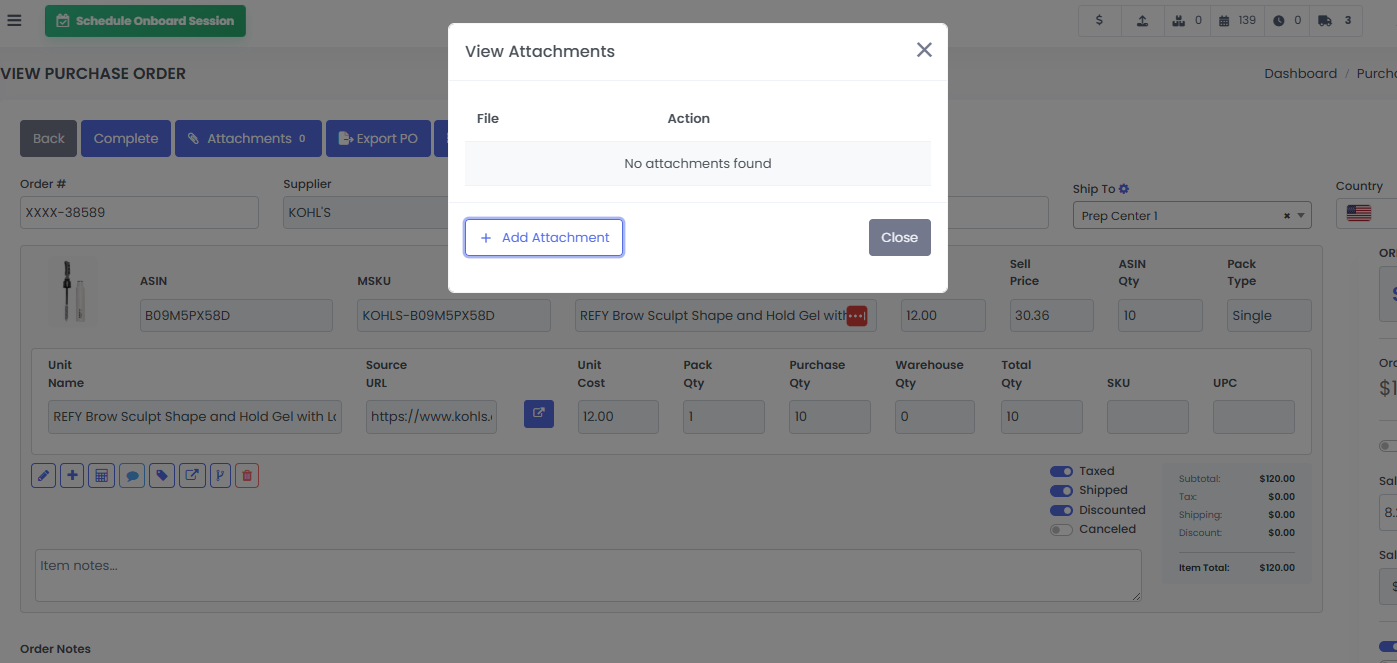
A product that looked good but arrives short, wrong, damaged, or undocumented can become a bad buy after checkout. Receipt management helps you catch those problems while you can still fix them.
The Bad Buy Prevention Checklist
- Did I calculate real net profit?
- Did I include custom fees?
- Does the ASIN meet my minimum ROI and margin?
- What happens if the price drops 5% or 10%?
- Am I approved to sell it?
- Is there hazmat or dangerous goods risk?
- Is Amazon on the listing?
- How many sellers are competing?
- Do competing sellers have deep stock?
- Have I bought this ASIN before?
- Do I already have inventory on hand or inbound?
- Does this fit my Buy List budget?
- Is the test quantity small enough for the risk?
- Do I have a clean purchase order and receipt plan?
If the product passes, it may be worth buying. If it fails, do not force it. There will be more products.
The best sellers are not the ones who buy the most inventory. They are the ones who reject bad inventory faster.
Frequently Asked Questions
How do I avoid bad Amazon buys?
Avoid bad Amazon buys by checking real profit, custom costs, seller approval, hazmat status, competition, price-drop risk, purchase history, and Buy List totals before adding products to your cart.
What makes an Amazon product a bad buy?
An Amazon product becomes a bad buy when the seller cannot profitably sell it after fees, costs, restrictions, competition, price drops, storage time, or purchase workflow problems.
Should I buy an ASIN if it has high sales rank but low profit?
Usually no. Strong demand does not fix weak profit. If the product does not meet your ROI, margin, and risk standards after real costs, it should be skipped or watched until the price or cost improves.
Why should I check seller competition before buying?
Seller competition affects how quickly your units may sell and whether the price may drop. A listing with many sellers or heavily stocked sellers can turn a profitable estimate into a weak buy.
How does 3P Mercury help prevent bad buys?
3P Mercury helps sellers check profit, fees, custom costs, approval status, hazmat risk, seller competition, Buy Rules, purchase history, Buy Lists, purchase orders, receipts, and inventory workflow before buying.
Related Reading
- For profit checks and ASIN analysis, read Why Every Amazon Seller Needs a Free Profit Calculator.
- For a full purchase workflow, read How to Purchase Effectively with 3P Mercury.
- For cash-flow planning before buying, read How to Manage Amazon Cash Flow.
Stop Bad Buys Before They Become Inventory
Sign up for 3P Mercury to simplify your business. The one software that takes you from sourcing to shipping, automated with the power of AI.
Sign up for 3P Mercury