
A profitable Amazon business can still run out of money.
That sounds contradictory, but profit and cash are not the same thing. You may have inventory that should produce a strong return, yet still lack the cash needed to pay a card, place a replenishment order, cover payroll, or handle an unexpected refund.
For a physical-goods business, money is constantly trapped in motion. It moves from your bank account into inventory, from inventory into an Amazon fulfillment center, and eventually from a sale into your next payout. Every delay along that path affects what you can buy next.
That is why cash flow is king. The goal is not merely to find profitable products. It is to keep enough working capital available so the business can continue operating while those products move through the system.
Understand Cash Flow Before You Try to Fix It
Three numbers are easy to confuse:
- Profit is revenue minus expenses over a period of time.
- Cash is the money available to use right now.
- Cash flow is the timing of money moving into and out of the business.
Inventory may be an asset on your books, but it cannot pay today's bill. A product with a projected $20 profit is not useful to your immediate cash position if it takes three months to sell and another two weeks to reach your bank account.
Imagine starting with $1,000 for inventory. If that inventory produces $1,200 in sales and the business has $100 in operating expenses, you may have $1,100 to reinvest. Repeating that cycle can grow the business, but only if the money returns before upcoming obligations are due.
The danger appears when a seller looks only at projected profit and keeps purchasing. The account may show thousands of dollars in inventory and healthy expected ROI while the bank balance continues shrinking.
Track available cash, not just account balances
The amount in your checking account is not automatically your buying budget. Some of it may already belong to:
- Upcoming credit card payments
- Payroll or contractor expenses
- Software subscriptions
- Shipping and prep costs
- Taxes
- Refunds, removals, or damaged inventory
- A minimum operating reserve
A useful weekly cash review starts with money available, subtracts known obligations and a reasonable buffer, and treats only the remainder as inventory purchasing capacity.
Map Your Cash Conversion Cycle
Your cash conversion cycle begins when you pay for inventory and ends when the proceeds are available for you to use again. The longer that cycle takes, the more working capital the business needs.
An Amazon seller's cycle may include:
- Paying the supplier
- Waiting for the supplier to ship
- Receiving and preparing the products
- Shipping inventory to Amazon
- Waiting for check-in and receiving
- Waiting for the products to sell
- Waiting for Amazon's payout
- Absorbing any later returns or refunds
Each stage deserves attention. A product can look excellent in a sourcing tool and still create a cash-flow problem if the supplier takes two weeks to ship, your team takes another week to prep it, and Amazon takes additional time to make it available.
Do not evaluate inventory only by ROI. Consider how quickly the cash is likely to return.
Find the delays you control
Some delays are outside your control, but many are operational:
- Orders sit unopened after delivery.
- Prep work is performed only once a week.
- Finished cartons wait several days before shipment.
- Slow-moving quantities are purchased because the unit economics looked attractive.
- Refund rates are ignored when planning future buys.
Measure the time between each major step. Even a simple table with purchase date, expected availability date, expected sell-through date, payout date, and payment due date can reveal where cash is getting stuck.
| Purchase | Expected Available | Expected Sale | Expected Payout | Payment Due |
|---|---|---|---|---|
| May 2 | May 16 | June 2 | June 16 | June 25 |
| May 9 | May 23 | June 9 | June 23 | July 1 |
The dates above are only an example. Statement cycles, payment due dates, sales timing, and payout timing vary. Always verify the terms and dates that apply to your own accounts.
Plan Inventory Spending Before Checkout
Cash-flow management becomes much easier when the purchasing decision is separated from checkout. For a complete buying workflow, see how to purchase inventory effectively with 3P Mercury.
Instead of buying each promising lead immediately, place candidates into a buy list. This creates a review point where you can compare products, quantities, and total planned spend before money leaves the business.
3P Mercury Buy Lists show information such as total units, total cost, expected ROI, and expected profit. That visibility turns a collection of individual products into a budget decision.
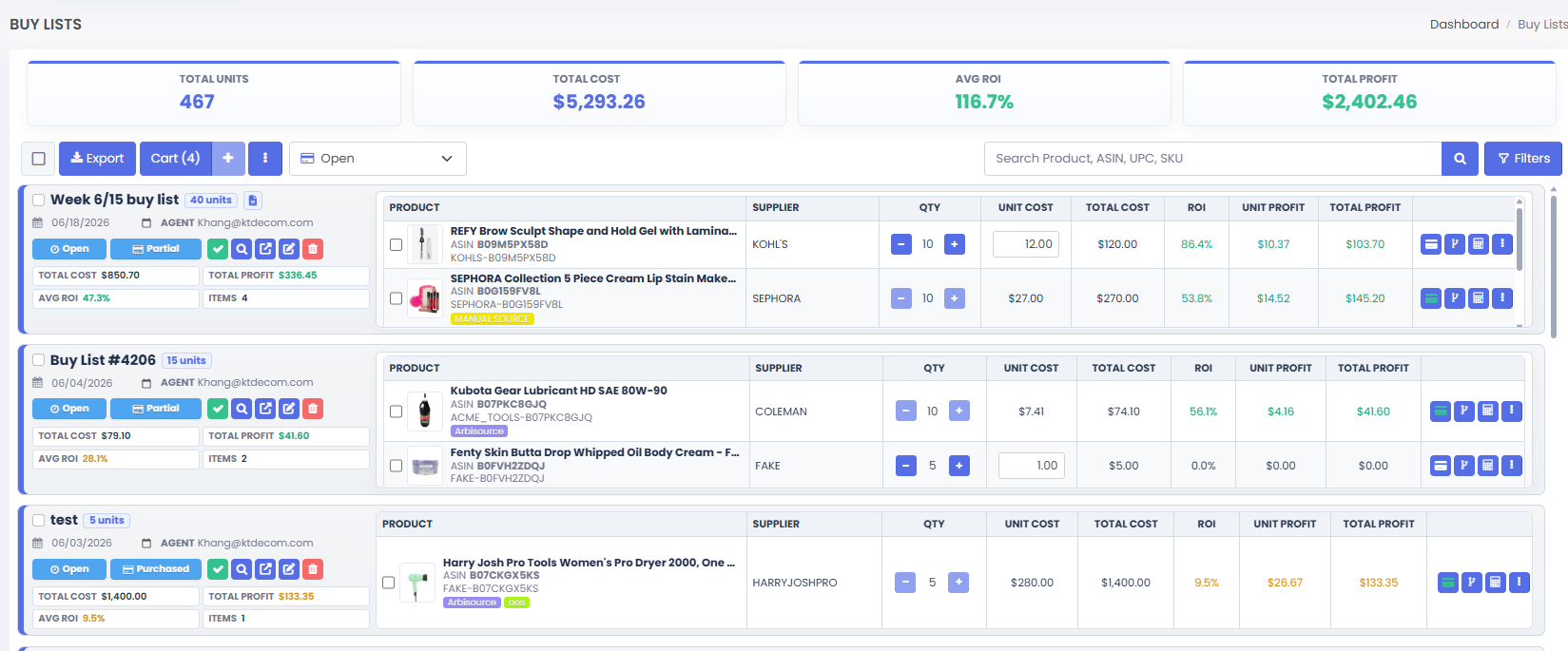
If a buy list totals $5,000 but your available purchasing budget is $3,000, you know immediately that something must be removed, reduced, or postponed.
Use a simple weekly cash plan
Create a rolling plan for at least the next few weeks:
| Cash-flow item | This week | Next week | Week 3 | Week 4 |
|---|---|---|---|---|
| Starting available cash | ||||
| Expected Amazon payouts | ||||
| Other incoming cash | ||||
| Card and loan payments | ||||
| Payroll and operating costs | ||||
| Tax and emergency reserve | ||||
| Maximum inventory spend |
Treat expected payouts conservatively. Sales can be returned, disbursements can change, and inventory can take longer than expected to become available. A plan that works only when everything happens perfectly is not a dependable plan.
Your buying budget should also leave room for proven opportunities. Spending every available dollar on today's test products can prevent you from restocking a strong seller tomorrow.
Replenish Proven Products Before Funding More Tests
New products are exciting, but replenishments usually come with better information.
For a product you have already sold, you may know:
- Actual sales velocity
- Actual fees and unit profit
- Real refund or return behavior
- How long the supplier takes to ship
- How quickly your team can prep it
- How the listing performs when competition changes
That makes the cash-flow outcome easier to estimate. A test product relies more heavily on projections.
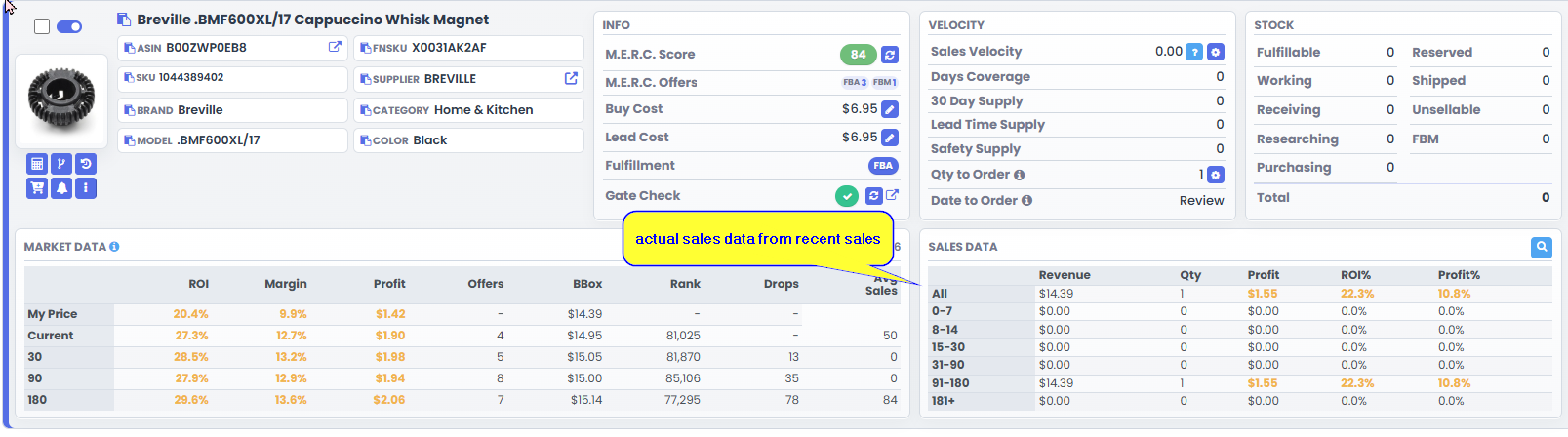
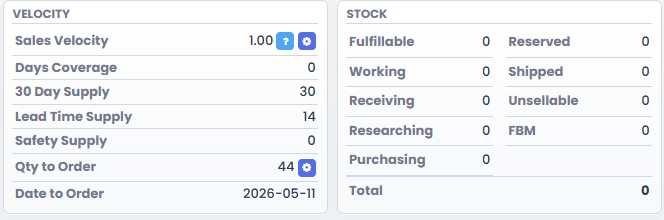
3P Mercury can help sellers review recent sales information and determine how much inventory may be needed. The point is not to reorder every previous winner automatically. It is to use actual performance as the starting point.
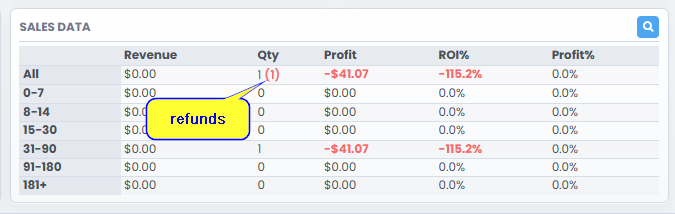
Refunds matter too. A product may appear profitable until the cost of returns is included. Reviewing actual losses helps prevent the same cash from being committed repeatedly to an item that looks better in theory than it performs in practice.
A practical allocation order is:
- Protect required operating cash and reserves.
- Fund proven replenishments with healthy recent performance.
- Fund smaller test buys from the remaining budget.
- Keep lower-priority leads tracked until cash is available.
This does not mean you should stop sourcing during a tight month. Continue building and monitoring your Amazon lead funnel. A lead can wait in your system until its price, competition, or your available budget makes the timing right.
Extend Your Cash Runway Carefully
Improving cash flow is not always about finding more money. Often, it is about shortening the operating cycle or matching payment timing more closely to inventory movement.
Move inventory faster
- Receive and inspect orders promptly.
- Prep and ship on a predictable schedule.
- Avoid purchasing quantities that greatly exceed realistic demand.
- Consider whether some appropriate products can be fulfilled by the merchant to avoid inbound receiving delays.
- Use local pickup or faster suppliers when the economics still make sense.
Faster processing will not rescue a bad product, but it can prevent a good product from becoming a cash-flow burden.
Negotiate supplier terms
Some wholesale suppliers may offer payment terms after a relationship and payment history are established. Terms that allow payment after an agreed number of days can give inventory time to arrive or sell before the invoice is due.
Terms vary by supplier and contract. Confirm all fees, due dates, late-payment consequences, and personal guarantees before relying on them.
Use credit for timing, not permission
Credit cards can create a useful gap between a purchase and its payment due date, particularly when purchases are made just after a statement closes. But the exact timing varies by issuer, and the balance still has to be paid.
Never treat an available credit limit as evidence that the business can afford the inventory. Before purchasing, ask:
- When is the payment actually due?
- Is the inventory likely to be sold and paid out before then?
- Can the business pay the balance if sales are slower than expected?
- What interest or fees apply if the balance is not paid in full?
Debt with frequent or aggressive repayments can drain the business before inventory has time to turn. Evaluate financing by total cost, payment frequency, collateral or guarantees, and how well the repayment schedule matches your inventory cycle.
Credit is a timing tool, not free inventory money.
Credit and financing decisions can materially affect your business and personal finances. Review current terms and consider advice from a qualified accountant or financial professional before committing.
Build a reserve before you need it
A reserve gives the business room to absorb slow receiving, delayed payouts, refunds, or an unexpectedly weak sales period. The guide to preventing slow selling months can help you plan inventory before seasonal demand changes.
Decide on a minimum cash level that is not part of the everyday sourcing budget. The right amount depends on your expenses, inventory model, debt obligations, and risk tolerance. What matters is making the reserve deliberate. Cash left over accidentally tends to get spent accidentally.
The strongest cash-flow system is not the one that buys the most inventory. It is the one that repeatedly converts inventory back into usable cash while preserving enough room for the next good opportunity.
Frequently Asked Questions
Why can an Amazon business be profitable but have no cash?
Profit measures performance over time, while cash flow reflects when money is available. Cash may be tied up in inventory, Amazon receiving, unsettled sales, or upcoming payouts even when the products are expected to be profitable.
How much cash should I keep in reserve?
There is no universal amount. Base the reserve on upcoming operating expenses, debt payments, taxes, expected refunds, inventory lead times, and how variable your payouts are. Keep it separate from the amount available for routine purchases.
Should I buy replenishments or test new products first?
Protect essential cash first. After that, proven replenishments often deserve priority because you have actual sales, fee, refund, and velocity data. Use a smaller, controlled portion of the remaining budget for tests.
Can credit cards improve Amazon cash flow?
They can help align purchase and payment timing, but only when the terms are understood and the balance can be paid responsibly. Statement dates, due dates, fees, and interest vary, so verify the details with your issuer.
How does 3P Mercury help manage cash flow?
3P Mercury Buy Lists help sellers see planned inventory cost before purchasing. Sales, velocity, refund, and restock data can then help prioritize proven products and avoid committing cash based only on projected performance.
Make Every Inventory Dollar More Deliberate
Sign up for 3P Mercury to simplify your business. The one software that takes you from sourcing to shipping, automated with the power of AI.
Sign up for 3P Mercury